Hybridization & God’s Biodiversity
What if "hybridization" didn't mean "more work?"

The Rev. Matt Handi, St. Luke’s, South Glastonbury
It’s 4 am. Too soon to be awake, too late to fall back asleep; I keep fading in and out. I went to bed with tomorrow on my mind and now tomorrow is today, first day jitters. Finally, at around 6 am I rise and head to the shower, my imagined leap out of bed is measured by a lack of sleep and the anxiousness I feel about starting a new call, my first call, a new priest in a new church.
I drive the half hour from home to Glastonbury, the morning light brightens the edges of a thin cloud with a wonderful array of oranges and yellows, a welcomed display as I head northeast on 84.
I arrive at the church. I place the key in the lock.
It doesn’t work.
I try shaking it and pushing my shoulder to the door and shaking the handle while turning the key just so and! Nothing.
First day. I’m stuck outside the church and it’s early yet and the key just won’t budge. This is frustrating.
While fiddling with the lock, my mind wanders. Frustrated thoughts mix with a rehash of the years, an appreciation of time past.
Today is the dream fulfilled. A faint call that grew louder over time, over years; I thought the act of walking into a small parish church after many years away was me answering that call. But the urge for more persisted, the urge to do more lingered. I joined the vestry, I became the Treasurer, I taught kids in J2A, I even started working for the church and still the call persisted. Impossible.
I try bracing my hip against the door, relieving any pressure on the lock that might be holding it back. One more time into the breach, I try to turn the key and! Nothing.
While fiddling some more, I realize I am standing on the shoulders of giants. Commission folks who gave me their time, their help, sat with me in conference room conversations and library chats, their calm touch and their listening ears provided support. Committee folks who gave up Saturdays to listen to my nervous rationalizations around my call to be a priest. Bishop folks who were so dedicated to guiding me through, whose words and letters and lunches were a gift of reassurance and correction.
So, I’m thinking if I press my knee against the door and my hand just above the handle while pushing on the door at the same time, I’m pretty sure I’ll be able to turn the key. I do so and! Nothing.
Frustration grumbles. It’s my first day and I can’t even get into the door. I’m not even sure I belong here. What about those others? Those giants? The ones who walk into the room and you think, wow! That woman is a priest! And she carries herself with such confidence and owns the room with knowledge and care, the collar is optional. How do I measure up? And doubt, well. Let’s put away doubt.
I am out of ideas. Until. Well, I’ve been standing outside this locked door for not too long now, there are other doors. The undercroft! I can get in through the basement! And so, I head around the corner.
I look once more towards the sky; the darker indigos of early dawn are giving way to the brighter blues of daylight. The colors though, remind me of a different sky in a different place.
The sky recalls my childhood yesterdays and the brook that flowed at the bottom of my street. I would build dams down there, ingenious constructions of the 10-year-old kind. Kid things that paused the flow but stopped nothing, those dams lasted no longer than Thomas doubted.
Hearing my mother’s voice calling into the dusk it was time to head back. I walked my bike up the hill from the brook. I saw home. Bright yellow lamplight shown through the bay window of our tiny raised ranch, white with black shutters and a red door. Walking up the driveway, I dropped the bike near the shed. I walked inside.
“Hey Mom”, I said. “I’m home. I heard you calling.”
I reach the undercroft door; the key turns and the door opens.
I step inside.
There are thresholds to be crossed.

The Rev. Dr. Anita Schell, St. Ann’s, Old Lyme
Years ago while team teaching a course at Southern Vermont College in Bennington VT, I was struck by what one of the professors said about the critical role our imaginations play in our life as people of faith. In the Tuesday evening Comparative Religions course, my team teacher invited us to look at the imaginary games we played at ages 3 and 4. These games would give us clues as to the pursuits of our later adult years. What games did you play that highlighted your dreams? It’s such a great question!
And, our imaginations are more than pondering our own dreams. Our imaginations can help us to envision how others live, and by imagining, can increase in us greater compassion and the courage to work for change in making a better, just world for all, no matter what the consequences to our comfort levels. Such imagining a better world for all and striving to create concrete steps toward that goal were in evidence last fall at the 26th Conference of the Parties to the United Nations Framework Convention on Climate Change, known as “COP26.”
24 lay and clergy delegates from the Episcopal Church representing Presiding Bishop Michael Curry and The Episcopal Church were led by Bishop Marc Andrus of California. Part of the delegates’ mission was to learn about the state of the climate crisis and efforts to address it, and to bring what they learned back to the wider church.
During COP26, the Episcopal delegates (as well as their Anglican counterparts) communicated their priorities to U.N. member states, participated in meetings and discussion forums, shared updates on social media and hosted events, including a “Liturgy for Planetary Crisis” and morning and evening prayer services. Episcopalians participated virtually from the United States, Europe and South America. Good intentions and work notwithstanding, advocacy to reduce the negative impacts of climate crisis is not felt equally among communities in the United States and around the globe. Fragility is not a uniform experience. As our Presiding Bishop Curry said in a Nov. 12 ABC News interview., “The most impacted [are] Indigenous peoples, people who are tied to the land, poor people.” And “We will see more mass migrations of people looking for food. … These will have an impact on the poorest of the poor.”
Added to the reality of such injustice is the Covid-19 pandemic. As the Archbishop of Canterbury Justin Welby wrote during COP26,
“The Covid-19 pandemic has forced the world to look at how we have been living and operating, when so much of what was considered ‘normal’ was not possible. We have been confronted by our behaviour: by our sin; our greed; our human fragility; our exploitation of the environment and encroachment on the natural world. For many this uncertainty is new. But many more around the world have been living with uncertainty for decades as the grim, real and present consequence of climate change.”
The Creation Care resolution #3 adopted at ECCT’s 2021 Convention specifically addressees this moral crisis with concrete action steps for every single one of us. As with addressing Covid-19 and racism, these resolves are intentional and mindful practices we as people of faith in CT can take in our Christian discipleship. While we know these unjust realities exist, concrete data received from the resolve steps of this resolution will enable us to better serve and support every community of our beloved ECCT, especially and particularly those for whom fragility is exacerbated by these multiple crises.
The world is a fragile place. It has always been so. How can we confess where we have contributed to this fragility and turn to repair brokenness especially for those beings for whom fragility has always been a way of life?

Offered by the Rev. Whitney Altopp
Join the Rev. Canon Ranjit K. Mathews and the Rev. Whitney Altopp on Feb. 1 at 6 p.m. via Zoom to learn more about The Poor People’s Campaign and the upcoming Mass Poor People’s & Low-Wage Workers’ Assembly and Moral March on Washington. Learn more.
The annual remembrance of Dr. King draws our attention to his call for unity across racial division. This message continues to resonate and inspire us today. However, in honor of him, we would do well to remember his other calls to action. At his death, Dr. King was fighting against what he called the “triplets of evil”– militarism, racism, and economic injustice– a combination which disregards human value. He and others committed themselves to solidarity with the poor of our nation to fight to close the economic gap by addressing the unholy trinity of these three features of American life. The effort was called The Poor People’s Campaign. It could be argued that this is ultimately what got him killed.

The Rev. Dr. William Barber and The Rev. Dr. Liz Theoharis have breathed new life into the Poor People’s Campaign. Beginning in 2018, “from Mother’s Day to the Summer Solstice, poor people and moral witnesses in 40 states committed themselves to a season of direct action to launch the Campaign. What ensued was the most expansive wave of nonviolent civil disobedience in the 21st century United States. More than a series of rallies and actions, a new organism of state-based movements was born. Now, in over 40 states, the groundwork for a mass poor people’s movement is emerging.” [efn_note]Poor People’s Campaign.[/efn_note] This revival of the Poor People’s Campaign came 50 years after Dr. King died working on it.
When the “triplets of evil”—militarism, racism, and economic injustice— come together, they create an environment of exploitation and disregard. Evil grows up around and through us, seemingly with ease. As the Poor People’s Campaign goes on to say:
“Today, 50 years after Rev. Dr. King and the 1968 Poor People’s Campaign declared that “silence was betrayal,” we are coming together to break the silence and tell the truth about the interlocking evils of systemic racism, poverty, ecological devastation, the war economy and our distorted moral narrative.
The truth is that systemic racism allows us to deny the humanity of others; by denying the humanity of others, we are given permission to exploit or exclude people economically; by exploiting and excluding people economically, we are emboldened to abuse our military powers and, through violence and war, control resources; this quest for the control of resources leads to the potential destruction of our entire ecosystem and everything living in it. And the current moral narrative of our nation both justifies this cycle and distracts us from it.” [efn_note]Poor People’s Campaign.[/efn_note]
In Dr. King’s final book, Where Do We Go From Here? Chaos or Community, published posthumously, we hear his prophetic words for that present moment speak to our present moment.
“We have ancient habits to deal with, vast structures of power, indescribably complicated problems to solve. But unless we abdicate our humanity all together and succumb to fear and impotence in the presence of the weapons we ourselves have created, it is as possible and as urgent to put an end to war and violence between nations as it is to put an end to poverty and racial injustice…I do not minimize the complexity of the problems that need to be faced in achieving disarmament and peace. But I am convinced that we shall not have the will, the courage and the insight to deal with such matters unless in this field we are prepared to undergo a mental and spiritual re-evaluation, a change of focus which will enable us to see that the things that seem most real and powerful are indeed now unreal and have come under sentence of death. We need to make a supreme effort to generate the readiness, indeed the eagerness, to enter into the new world which is now possible, ‘the city which hath foundation, whose Building and Maker is God.’”[efn_note]Martin Luther King, Jr., Where Do We Go From Here? Chaos or Community (Boston: Beacon Press, 1968), 195.[/efn_note]
The Poor People’s Campaign in its current inception helps us have “the will, the courage and the insight to deal with such matters.” The Rev. Canon Ranjit K. Mathews and I are inviting interested persons to a planning meeting on Feb. 1 at 6 p.m. via Zoom, to begin to lay the groundwork for a Connecticut presence at the Mass Poor People’s & Low-Wage Workers’ Assembly and Moral March on Washington on June 18, 2022. Learn more about how you can participate in this planning meeting.
We hope that you’ll be inspired by the closing words of Dr. King’s final book.
“We are now faced with the fact that tomorrow is today. We are confronted with the fierce urgency of now. In this unfolding conundrum of life and history there is such a thing as being too late. Procrastination is still the thief of time. Life often leaves us standing bare, naked and dejected with a lost opportunity. The ‘tide in the affairs of men’ does not remain at the flood; it ebbs. We may cry out desperately for time to pause in her passage, but time is deaf to every plea and rushes on. Over the bleached bones and jumbled residues of numerous civilizations are written the pathetic words: ‘Too late.’ There is an invisible book of life that faithfully records our vigilance or our neglect. ‘The moving finger writes, and having writ moves on…’ We still have a choice today: nonviolent coexistence or violent coannihilation. This may well be mankind’s last chance to choose between chaos or community.” [efn_note] King, 202.[/efn_note]
Prior to 2026, Focus on FinOps was entitled, Mission Matter$. Focus on FinOps is the ECCT newsletter that keeps you informed about topics in parish administration, finance, HR, and property management.
D&B is pleased to inform you that we have enhanced the reporting portal for the monthly investor reports. The improved SEI Archway platform is tentatively scheduled to be launched, with the November 30, 2022, report available around December 21. As part of the process, the week of December 12th we invite you to access the new portal. Be on the lookout for the new link and login information. The October reports will be available. We invite you to be part of the process by reviewing the legacy portal reports with the new portal.
You will receive an email from Archway afoadmin@seic.com with login details. Once you receive this email, you will have 120 hours (5 days) to reset your password before it expires. If you have trouble accessing the portal, please contact afoadmin@seic.com.
If you have questions or need any further assistance or noted discrepancies, please get in touch with Theresa Dupont at tdupont@episcopalct.org
ECCT has rolled out the new aspect of its ConnECCT file share. The purpose of this parish-specific side of ConnECCT is to create individual file folders for each parish in the ECCT. These folders will house various information such as accords, (thus relieving us of the need to send out hard copy letters, a savings in labor and supplies), insurance renewal surveys, CMS and insurance invoices, etc. contact the Operations Manager to register your parish or for more information.
ECCT will be processing your monthly invoices via the parish-specific side of ConnECCT. January’s invoice will contain the 2021 property & casualty premiums, due to the ongoing negotiations. In Q2 adjustment to the parish invoices will be made accordingly. Invoices for the remainder of the year will be issued within the first week of every month via email.
The recipients will be the Rector or Priest-in-Charge (PIC) and Treasurer (in the absence of a Rector or PIC, the Sr. Warden will be included). To ensure that we have your current information update your parish’s survey online. To reset your password, contact the Operations Manager.
ECCT is shifting all payment processing to ACH/Direct Deposits to ensure secure, swift, and timely payments. Please ensure that you have provided us with your parish’s current banking information.
ECCT is recommending that parishes use direct deposits to ensure timely deposit to the Fund. Direct deposits are secure, swift, simple, and won’t be lost, delayed, and will ensure the timely payments of your parish’s commitments. Contact the Canon for Mission Finance & Operations for more information.
We are extending the deadline to apply for a 2021 Property Improvement Grant. Parishes can now apply through January 31. Details and the application can be found in the grants section here on our website.
Building Winterization Best Practices (downloadable resource on ConnECCT)
Group Life Insurance IRC section 79 provides an exclusion for the first $50,000 of group-term life insurance coverage provided under a policy carried directly or indirectly by an employer. There are no tax consequences if the total amount of such policies does not exceed $50,000. The imputed cost of coverage in excess of $50,000 must be included in income, using the IRS Premium Table, and are subject to social security and Medicare taxes.
Employer’s Tax Guide to Fringe Benefits
Future Developments
For the latest information about developments related to Pub. 15-B, such as legislation enacted after it was published, visit the IRS website. For the latest guidance and information about COVID-19 tax relief, go to IRS.gov/Coronavirus.
Beginning on January 1, 2022, the standard mileage rates for the use of a car (also vans, pickups or panel trucks) will be:
COVID Tax Tip 2022-03, January 5, 2022
The IRS started issuing information letters to advance child tax credit recipients in December. Recipients of the third round of the Economic Impact Payments will begin receiving information letters at the end of January. Using the information in these letters when preparing a tax return can reduce errors and delays in processing.
People receiving these letters should keep them. Do not throw them away. These letters can help taxpayers, or their tax professional prepare their 2021 federal tax return.
The United States Postal Service began changing first-class mail delivery time frames. This change may result in mail taking longer to arrive at its destination. Due to this, D&B recommends that parishes use direct deposits to ensure timely deposit to the Fund. Direct deposits are secure, swift, simple, and won’t be lost, delayed, or returned to sender. Contact the Director of Operations for Donations & Bequests to set up direct deposit.
For Additions, Changes, and Withdrawals, email the Request Form to the Director of Operations & Bequests. Vestry minutes are required.
by the Rev. Canon Ranjit K. Mathews
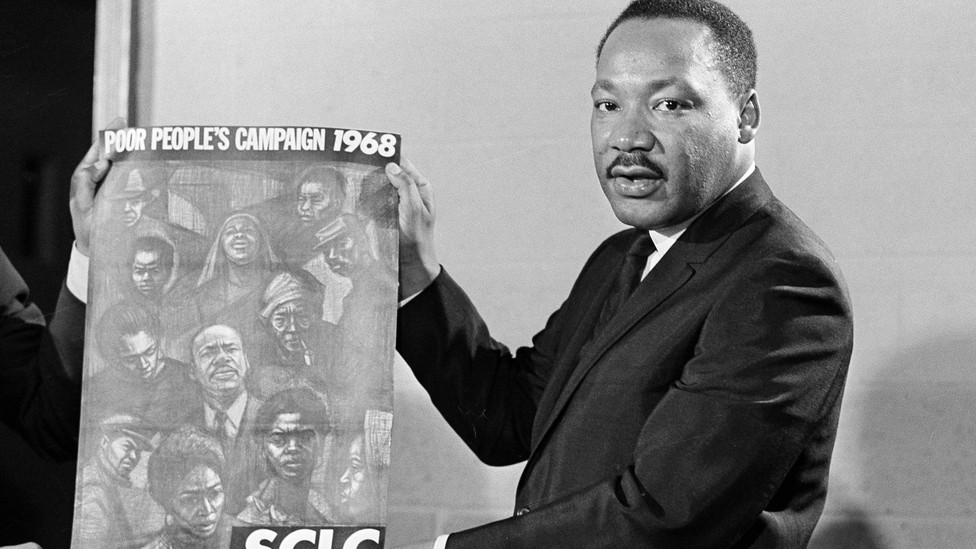
One of many teachings that Dr. Martin Luther King, Jr. shared through his life is that as baptized followers of Jesus, our ministry will inevitably be political. He didn’t necessarily name this; but he certainly embodied it.
As Episcopalians, however, it is important that we name politics and that as followers of Jesus, we will have to be political to move into the work that Jesus told us to do, in his name.
Episcopalians find the word “politics” within Church settings difficult because when we hear the word, we think of electoral partisanship. And of course, Churches should never be sites of political partisanship. However, by the very nature of following Jesus and how he called us to live:
The Spirit of the Lord is upon me,
because he has anointed me
to bring good news to the poor.
He has sent me to proclaim release to the captives
and recovery of sight to the blind,
to let the oppressed go free,
to proclaim the year of the Lord’s favor.” (Luke 4:18-19)
we will be political. And like renowned Rabbi Danya Ruttenburg says, “my tradition has policy implications.”
This is but one of the many ways, we can learn from the life of Dr. King.
If we are not able to acknowledge the deeply political dimension of the Gospel, we end up making the Dr. King holiday an idol we worship, celebrating the man, but evading the call to embody the work of Christ.
The reality is the holiday has become a national and even an ecclesial idol, a chance for a majority of the United States and people of faith to talk about a so called “post-racial society, pontificate in a book club about racial justice,” but stopping from taking the next collective step forward as a society to challenge systemic injustice. The holiday has become an opiate to embodied justice work.

Jesus never called us to worship him; but to follow him. It is always time to talk, ponder, and stretch our own moral imagination to the life of Dr. King; but we should not stop there. Our communal reality calls us to embody, to live a life that is radiant with justice. What we profess on a Sunday morning needs to live on, on a Monday.
In what ways can you take another step forward in embodying the Gospel? In a culture of silence, speak the Truth in Love. Do some research on the Poor People’s Campaign. There are endless opportunities and I invite you to take the next right step.

Lesser Feasts and Fasts
Martin Luther King, Jr. (pg. 175)
Almighty God, by the hand of Moses your servant you led your people out of slavery, and made them free at last: Grant that your Church, following the example of your prophet Martin Luther King, may resist oppression in the name of your love, and may secure for all your children the blessed liberty of the Gospel of Jesus Christ; who lives
and reigns with you and the Holy Spirit, one God, now and for ever. Amen.
The Book of Common Prayer: For Social Justice (pg. 260)
Almighty God, who hast created us in thine own image: Grant us grace fearlessly to contend against evil and to make no peace with oppression; and, that we may reverently use our freedom, help us to employ it in the maintenance of justice in our communities and among the nations, to the glory of thy holy Name; through Jesus Christ our Lord, who liveth and reigneth with thee and the Holy Spirit, one God, now and for ever. Amen.
Lesser Feasts and Fasts:
Martin Luther King, Jr. (pg. 175)
Almighty God, who by the hand of Moses thy servant didst lead thy people out of slavery, and didst make them free at last: Grant that thy Church, following the example of thy prophet Martin Luther King, may resist oppression in the name of thy love, and may strive to secure for all thy children the blessed liberty of the Gospel of Jesus Christ; who liveth and reigneth with thee and the Holy Spirit, one God, now and forever. Amen.
The Book of Common Prayer: For Social Justice (pg. 209)
Almighty God, who hast created us in thine own image: Grant us grace fearlessly to contend against evil and to make no peace with oppression; and, that we may reverently use our freedom, help us to employ it in the maintenance of justice in our communities and among the nations, to the glory of thy holy Name; through Jesus Christ our Lord, who liveth and reigneth with thee and the Holy Spirit, one God, now and for ever. Amen.
For Social Justice (pg. 823)
Grant, O God, that your holy and life-giving Spirit may so move every human heart [and especially the hearts of the people of this land], that barriers which divide us may crumble, suspicions disappear, and hatreds cease; that our divisions being healed, we may live in justice and peace; through Jesus Christ our Lord. Amen.
For the Poor and the Neglected (pg. 826)
Almighty and most merciful God, we remember before you all poor and neglected persons whom it would be easy for us to forget: the homeless and the destitute, the old and the sick, and all who have none to care for them. Help us to heal those who are broken in body or spirit, and to turn their sorrow into joy. Grant this, Father, for the love of your Son, who for our sake became poor, Jesus Christ our Lord. Amen.
For the Oppressed (pg. 826)
Look with pity, O heavenly Father, upon the people in this land who live with injustice, terror, disease, and death as their constant companions. Have mercy upon us. Help us to eliminate our cruelty to these our neighbors. Strengthen those who spend their lives establishing equal protection of the law and equal opportunities for all. And grant that every one of us may enjoy a fair portion of the riches of this land; through Jesus Christ our Lord. Amen.
Thanksgiving For the Diversity of Races and Cultures (pg. 840)
O God, who created all peoples in your image, we thank you for the wonderful diversity of races and cultures in this world. Enrich our lives by ever-widening circles of fellowship, and show us your presence in those who differ most from us, until our knowledge of your love is made perfect in our love for all your children; through Jesus Christ our Lord. Amen.

